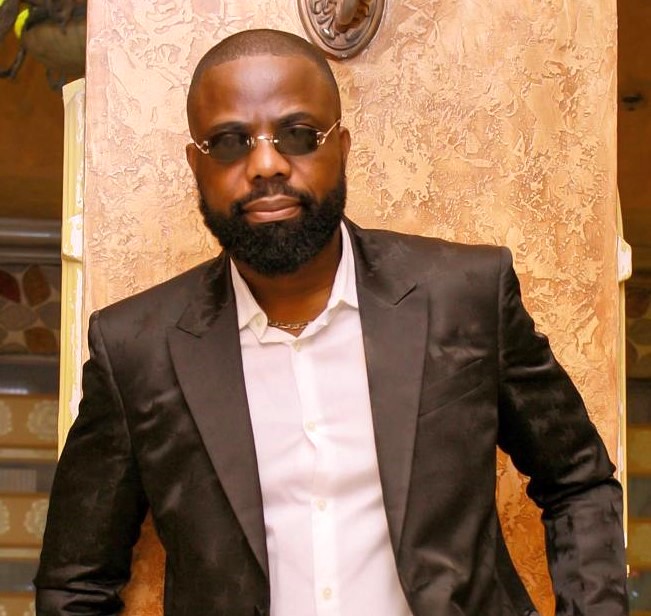
The Africa International Tourism and Economic Council (AITEC–World) has appointed the immediate past President of the Federation of Tourism Associations of Nigeria (FTAN), Mr. Nkereuwem Onung, as its Special Advisor.
In a letter of appointment sent to Mr. Onung, AITEC-World said the appointment was based on Onung’s ‘distinguished record as a visioner in tourism development, cultural heritage promotion, and socio-economic transformation across the world.
The letter which was signed by the President of AITEC-World, Ambassador Dine Bouraima, continued: “Over the years, your groundbreaking initiatives have not only showcased Africa’s rich tourism potential to the world but have also empowered countless communities through innovative tourism-driven economic models. Your leadership, creativity, and commitment to Africa’s image on the global stage have set benchmarks for excellence in the sector.”
Spelling the role of the special advisor, the letter said Onung’s experience and wealth of knowledge, network, and experience will be invaluable in guiding the strategic direction and ensuring that the association’s programmes deliver transformative impact across the world. It further said: “We are confident that your service in this capacity will further inspire innovation, strengthen our advocacy for tourism-led economic growth, and contribute significantly to AITEC–World’s vision for a united, prosperous, and competitive tourism world.”
The National Institute for Hospitality and Tourism (NIHOTOUR) hosted the leadership and members of the Hotel Owners Forum Abuja (HOFA) at its Headquarters in Abuja, in a meeting aimed at strengthening collaboration, clarifying regulatory responsibilities, and charting a path for joint growth in Nigeria’s hospitality sector.
The delegation, led by HOFA President Mr. Emeka Ezekwesili, was received by the Director-General of NIHOTOUR, Aare Dr. Abisoye Fagade, FIMC, alongside senior management of the Institute.
At the meeting, NIHOTOUR painstakingly explained the provisions of the NIHOTOUR Establishment Act 2022 and the 2025 Regulations, underscoring its role as Nigeria’s apex training, certification, and regulatory body for hospitality and tourism professionals. Dr. Fagade clarified that NIHOTOUR’s mandate does not involve registering hotels or physical establishments, which remains within the purview of other agencies.
Rather, NIHOTOUR registers and certifies the alter egos of the industry—the operators, personnel, and professionals whose skills and competencies directly shape service quality, safety standards, and customer experience in Nigeria’s hospitality ecosystem.
“Our responsibility is to professionalize the sector by ensuring that those who run hotels, manage guest relations, cook in kitchens, or serve as tour operators are adequately trained, certified, and globally competitive,” Dr. Fagade stated.
“This is about people, not just places. Hotels do not run themselves—people do. And it is these people we are committed to upskilling, accrediting, and empowering in line with the law.”
The interactive session also focused on identifying areas of support that NIHOTOUR can extend to HOFA members in Abuja, especially in capacity building, staff certification, and professional development.
Both parties agreed to establish a Joint Implementation Committee to drive the resolutions reached at the meeting and ensure effective follow-up actions.
The visit underscores NIHOTOUR’s commitment to engaging industry stakeholders, fostering compliance, and advancing its vision of building a world-class hospitality and tourism workforce for Nigeria.
Professor Wasiu Babalola, a professor of hotel management, forensic accounting and audit was today, August 9, in Lagos elected to chair Standards Organisation of Nigeria’s (SON) National Technical Committee on Tourism and Related Services. Key roles of the committee include: to identify the standards the tourism industry needs; participate fully in their development, and also champion their implementation.
Speaking during the inauguration, the Director General of SON, Dr. Ifeanyichukwu Nonso Okeke, represented by Engr. (Dr) Lekan Omoniyi, acknowledged the Standardisation Conference for Tourism in Lagos and other joint initiatives between SON and the tourism industry laid the groundwork for the takeoff of the National Technical Committee on Tourism and Related Services. He said tourism is not just about leisure or travel, but also storytelling. His words: “It is the story we tell the world about who we are, our identity, our culture, our spirit. It is the heartbeat of our heritage, the rhythm of our festivals, the warmth of our hospitality, and the beauty of our diverse landscapes. Across the world, nations have discovered the transformative power of tourism. It creates jobs, attracts investment, empowers communities, and opens the gates of cultural diplomacy. And yet, all this is only possible when there is trust—trust in the quality, safety, and professionalism of the services a nation provides. That trust is built on one word: standards.”
The director general went further to point out the necessity and importance of standards in the hospitality and tourism industry: “Without standards, there is no assurance. Without assurance, there is no confidence. And without confidence, there is no growth. Nigeria is a country rich in natural wonders and cultural treasures, from the majestic Zuma Rock to the vibrant Osun-Osogbo Festival, from the tranquility of the Obudu Mountain Resort to the bustling energy of Lagos nightlife. We are not lacking in attractions. What we must now perfect is our delivery. And that is where the SON comes in.
“As the nation’s custodian of quality, SON is entrusted with the responsibility to develop, promote, and implement national standards that uplift the quality of life and the competitiveness of our industries—including tourism and its related services. But we know that the most relevant, impactful standards are not written by bureaucrats in boardrooms. They are born out of collaboration with those who live the realities of the industry every day, that is, you. This national technical committee is not ceremonial. It is a living and functional foundation. And its success rests on three critical responsibilities that I urge each of you to take to heart.”
“You have been chosen to be torchbearers for a tourism sector that has the potential to transform our economy, enrich our people, and reposition Nigeria on the global map. Your work will play a crucial role in driving progress and contributing to the success of President Bola Ahmed Tinubu’s 8-point agenda, particularly in areas such as economic diversification, job creation, and infrastructure development. As you establish national standards for the tourism sector, you will be defining the future of our industry. You will determine how our hotels are run, how our tours are delivered, how our heritage is preserved, and how the world experiences Nigeria. When these standards are adopted and implemented, they will bring about improvement and excellence, ultimately benefiting our businesses, youths, and the nation as a whole,” Dr. Okeke added.
Mrs. Kehinde Daniel will serve as the deputy chairmen of the committee.
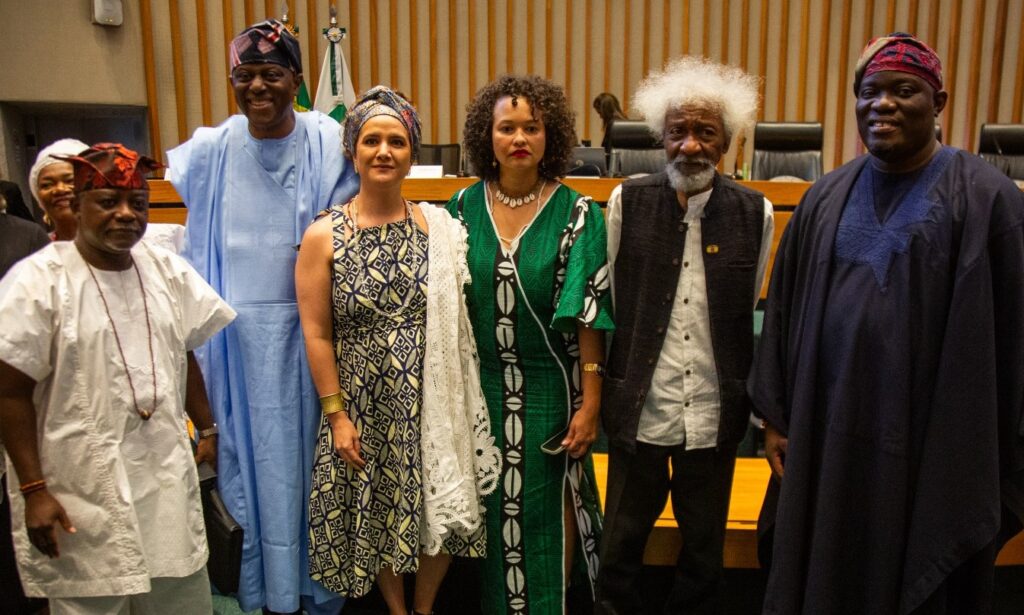
Central Bank of Nigeria (CBN) Governor Yemi Cardoso has described the Heritage Voyage Return (HVR) project currently being championed by Nobel Laureate Profeesor Wole Soyinka as a masterstroke that would help woo the Diaspora back to Africa and grow tourism in the continent. Cardoso said this at a historic parliamentary session held at the Legislative Chamber of the Federal District in Brasília, Brazil, while delivering a keynote address in support of the Heritage Voyage of Return Project, a cultural and economic diplomacy initiative being spearheaded by Professor Soyinka.
The event took place as part of President Bola Ahmed Tinubu’s state visit to Brazil, under the theme Brazil – Nigeria: Heritage, Dialogue and Future, and was organized by the Oduduwa Heritage Home Brazil in collaboration with Parliamentarian Gabriel Magno.
Cardoso praised the Heritage Voyage of Return Project as a “perfect masterpiece idea” strategically positioned to reconnect the African Diaspora with the continent, describing it as a bold and timely initiative that aligns with Nigeria’s broader economic and cultural vision.
“This is a significant and strategic move. The Heritage Voyage of Return is more than just a cultural initiative—it is an economic catalyst. It will attract the diaspora back to Africa and ultimately boost foreign exchange inflows to Nigeria,”Cardoso stated.
He commended the dedication of Mrs. Abike Dabiri-Erewa, Chairman of the Nigerians in Diaspora Commission (NIDCOM), and Otunba Biodun Ajiboye of the National Institute for Cultural Orientation (NICO) for their unwavering commitment to the project, noting that their efforts are instrumental in bridging cultural and economic relations between Nigeria and its diaspora communities.
Cardoso also offered high praise to the international coordinators of the project, Mrs. Carolina Morais and Mr. Ajoyemi Osunleye. He said: “After speaking with Ajoyemi and Carolina, I was fully convinced. They are exceptional individuals, true ambassadors of both Nigeria and Brazil. We are indeed lucky to have such a powerful couple leading this initiative alongside Professor Soyinka.”
The CBN Governor underscored the deep-rooted historical and cultural ties between Nigeria and Brazil—especially among Afro-Brazilian communities in Lagos and Bahia—highlighting shared traditions such as carnivals, cuisine, architecture, and spiritual heritage. He recalled his own past efforts to formalize sister-city relations between Lagos and Salvador, Bahia, a vision he believes is now more attainable than ever.
“Today, there’s an unprecedented level of commitment between our two Presidents—President Lula and President Tinubu. With direct flights now connecting our countries, the time for action is now,” Cardoso affirmed.
He further spotlighted institutions like Lagos State University’s Centre for Afro-Brazilian Studies (LASUCATHS), which currently trains over 600 students in Portuguese and fosters cultural exchanges with Brazilian academic institutions.
He concluded: “This is not just about economics—it is about shared identity, culture, and strategic partnership. If we can’t achieve this now, with all the pieces aligned, then we have only ourselves to blame. Let us seize this moment to build a future of mutual growth, cultural pride, and unity.”
The session was part of a broader cultural diplomacy effort aimed at deepening Nigeria–Brazil relations through heritage, education, tourism, and creative industry collaborations.
The world’s biggest names in travel and tourism set to take to converge in the Eternal City. The World Travel and Tourism Council (WTTC) has unveiled the first wave of headline speakers for its milestone 25th Global Summit in Rome, which includes a glittering line-up of some of the most influential figures shaping the future of the sector.
From the 28 – 30 September, the Eternal City will play host to a gathering of global business leaders from across business, government, and media, as the Global Summit returns to Europe in partnership with the Italian Ministry of Tourism, ENIT (the Italian national tourist board), the Municipality of Rome, and the Lazio Region.
Taking place at the iconic Auditorium Parco della Musica, the event will set the stage for high-impact debates and bold commitments on the issues defining Travel and Tourism.
From the game-changing potential of AI to shaping the future of a sector that generates 10 percent of global GDP.
The first confirmed speakers include:
Minor Hotel Group, Founder & Chairman, William E. Heinecke Virtuoso, Founder & CEO, Matthew Upchurch Trip.com Group, CEO, Jane Sun, CEO TBO.Com, Co-Founder, Gaurav Bhatnagar Diriyah Company, Group CEO, Jerry Inzerillo MSC Cruises, Executive Chairman of Cruise, Pierfrancesco Vago Arsenale Spa, CEO, Paolo Barletta IC Bellagio, CEO – Sole Founder, Andrea Grisdale The Bicester Collection, Chair & Global Chief Merchant, Desiree Bollier Marriott International, CEO, Anthony Capuano Visit California, President & CEO, Caroline Beteta Google Inc, Head of Retail & Travel, EMEA Partnerships Solutions, Christie Travers-Smith InterContinental Hotels Group, Global CEO, Elie Maalouf Amadeus, President: Travel, Decius Valmorbida Menezes VFS Global, Founder, Founder & CEO, Zubin Karkaria
Other speakers include:
Indian Hotels Company, CEO, Puneet Chhatwal Microsoft, Global Managing Director – Travel, Transport & Hospitality Industry, Julie Shainock OMRAN Group, CEO, Hashil Al Mahrouqi Terme & Spa Italia, President & Owner, Massimo Caputi
During the Global Summit, WTTC’s current Chair, Greg O’Hara, Founder and Senior Managing Director of Certares Management LLC (“Certares”) will pass the torch to Manfredi Lefebvre, Chairman of Heritage Group and co-chair of luxury travel company Abercrombie and Kent – one of the most recognised names in Travel & Tourism.
Julia Simpson, WTTC President & CEO, said: “We’re thrilled to have such a distinguished group of speakers already confirmed for our Global Summit in Rome.
“The Eternal City provides a perfect backdrop for a Summit where the world’s Travel & Tourism leaders will gather to innovate, collaborate, and drive a decade of exceptional, sustainable growth.”
Minister of Tourism, Daniela Santanchè, who will also be addressing delegates at this year’s Global Summit said: “The names confirmed so far reaffirm the absolute prestige of the world’s largest tourism event: the WTTC Global Summit will be a historic moment that will offer enormous opportunities in favour of large investments in Italy, so much so that a special focus with Invitalia is dedicated precisely to this issue”.
Greg O’Hara, Founder & Senior Managing Director, Certares, and WTTC Chair, added: “The WTTC Global Summit has evolved into the most influential gathering in Travel & Tourism, bringing together the people and ideas that shape our sector’s future. Rome will be a launchpad for the next decade of growth, innovation, and collaboration.
“I’m honoured to host my final Summit as Chair alongside such an extraordinary line-up of leaders, as we work together to ensure Travel & Tourism continues to drive prosperity and connect cultures around the world.”
Manfredi Lefebvre, Executive Chairman of AKTG, Abercrombie & Kent and Crystal Cruises and WTTC Chair-Elect, added: “As we gather in the heart of Rome, we are reminded that the future of Travel & Tourism is not just about destinations, but about the connections we forge and the experiences we create together. This summit marks a pivotal moment for our industry; it is an opportunity to embrace innovation and resilience, ensuring that we not only thrive but also leave a lasting legacy for future generations.”
More speakers and headline sessions will be announced in the coming weeks, with the programme set to tackle the most pressing challenges and exciting opportunities for a sector that generates millions of jobs, drives economic resilience, and connects communities across the globe.
Victoria Crown Plaza (VCP) Hotel has been a key player in Nigeria’s hospitality industry for 18 years, standing as a beacon of luxury and quality amidst a volatile economic landscape. Renowned for its impeccable services and world-class facilities, VCP has consistently maintained its four-star rating, offering a blend of comfort, elegance, and
Authenticity that continues to set it apart from competitors.At the heart of VCP’s enduring success is its Chief Executive Officer, Emeka Ofor, a hospitality expert with a commitment to integrity and quality. Unlike many competitors who overstate their offerings, Ofor has been upfront about the hotel’s true status as a four-star establishment delivering genuine four-star services.
“We’ve been transparent about who we are,” Ofor stated in a recent interview. “Victoria Crown Plaza offers the space, amenities, and service you would expect from a four-star hotel anywhere in the world. Our focus is on exceeding guest expectations and creating memorable experiences.”
Every aspect of VCP is designed to meet the needs of discerning travelers. The hotel offers some of the largest room sizes in the country, starting at 44 square meters and reaching up to 300 square meters for its presidential suite. Each room features high-end furnishings, including 7×6 king-size beds with premium memory foam mattresses, Bosch wine bars, and a private sitting lounge.
The hotel’s facilities include a state-of-the-art gym, spa, swimming pool, and top-tier conference rooms. business travelers are particularly drawn to VCP’s high-speed internet, powered by Starlink, which ensures seamless connectivity.
“Our internet bandwidth is among the fastest, catering to business travelers who rely on uninterrupted access,” Ofor noted. “Coupled with personalised concierge services, we make every stay safe, comfortable, and productive.”
Running a four-star hotel in Nigeria’s current economic climate is no small feat. The devaluation of the Naira has made it difficult for hotels like VCP to charge rates that align with global standards. While four-star hotels worldwide charge $250 to $300 per night, VCP’s rates are often limited to $120 due to market constraints.
“The challenge is significant,” Ofor admitted. “But we’ve remained committed to our standards. Our guests deserve the best, and we deliver, regardless of the circumstances.”
Victoria Crown Plaza’s enduring reputation is built on three core principles: authenticity, quality, and integrity. With a track record of hosting high-profile guests, including former CEOs and dignitaries, the hotel has solidified its place as a trusted name in Nigeria’s hospitality sector.
“Victoria Crown Plaza is not just a hotel; it’s a promise of luxury and reliability,” Ofor emphasized. “We’ve adapted to challenges without compromising on the quality of our services, and that’s what keeps our guests coming back.”
Victoria Crown Plaza stands out as the ideal choice for travelers seeking authentic four-star services, offering spacious rooms, luxurious amenities, and world-class facilities. The hotel is renowned for its unwavering commitment to quality, consistently maintaining high standards even amidst economic challenges. Whether for business or
Leisure, guests enjoy premium connectivity, personalized services, and an experience that seamlessly blends comfort and sophistication.
Victoria Crown Plaza continues to shine as a testament to resilience and dedication in Nigeria’s hospitality industry. With nearly two decades of excellence, it remains a prime choice for travelers seeking genuine luxury and unmatched service.
Ahead of FESTAC Africa 2025 celebration, which is slated to hold in Accra, Ghana, between September 21 and 27, 2025, the world will witness the first ever Africa’s cross border carnival parade put together by Motherland Beckons, the organisers of IPADA Initiative, in collaboration with FESTAC Africa 2025.
It is a two-day carnival parade, holding between September 18 and 19, with the procession beginning from Nigeria enroute Accra, Ghana. According to the organisers, the cross border carnival will parade through Lagos (Nigeria), Cotonou (Benin Republic); Lome (Togo) and Accra (Ghana).
It further noted that it will be the biggest ever street party to hold on the soil of Africa and across three countries. It is a cultural tourism extravaganza that will feature among others African cultural arts, traditional music, culinary, costumes and dance from different African countries.
The procession, which is tagged; Carnival for The Unity of African People, is according to the organisers, “indeed going to be an epoch making event, and everyone is invited.”
The cross border carnival is designed to herald and culminate in the grand celebration of FESTAC Africa 2025 (Festival of Black and African Arts and Culture), holding in Accra. ‘‘It is definitely going to be the biggest road show, cultural festival, with a cross border carnival that will elucidate trans-border interactions, inter cultural exchange and celebration of life,’’ noted the organisers.
Stating further, ‘‘it is time to experiment and experience Africa like never before. Come dance to African beats and music. Come see what makes Africa tick and different, as the vibrant carnival train moves from one coastal Western African country to another in grand style with flatbed trucks, comfortable air-conditioned buses, live drumming, dancing, and colourful costumes, along with good music, food, and fun at every rest areas.
‘‘The rest areas along the way will feature music, food, and great vibes. Musicians, dancers, and tourists from across Africa can join the carnival trains at the different rest areas in Cotonou, Lome or Accra.’’
It also noted that one of the star performances in the two days event, will be the appearance of B.A.D Gang (Bikers with Attitude and Determination), the largest biking club in Africa. Other bikers clubs that will feature in this cultural tourism fiesta that is aimed to unite Africa, through tourism and creative arts, are; Ace Bikers, Metallic Bullridez, Alimosho Biking club and Loud Night Biking Club.
Besides, motor sport will be encouraged on the route, as the organisers disclosed that people can come with their cars on parade on the carnival route, however, such participating cars will be registered and pay a token to be part of the fun.
FESTAC was first celebrated in 1966 in Dakar, Senegal and later in 1977 in Nigeria. It generated a lot of buzz for Nigeria and attracted a number of development, including the building of the National Arts Theatre that was used for the event and FESTAC Town in Lagos, a housing estate that accommodated the various artistes and participants and officials of the festival.
Motherland Beckons’ IPADA Initiative, an activation by Otunba Wanle Akinboboye, who is the Founder and President of La Campagne Tropicana Beach Resort, made its grand entry last year, with the enactment of 10 days celebration that featured among others carnival procession, Business Unusual, empowerment programme for women and youths, musical concerts and culinary treats from across Africa.
President Bola Ahmed Tinubu is the Grand Patron, Chief Host and Global Ambassador of IPADA Initiative (Mass movement of people), which is designed to attract Blacks in the Diaspora and lovers of Africa to reconnect with their roots, Motherland, to visit and explore its cultural tourism and business potentials be part of the development of the continent.
Lagos and Abuja are serving as gateways to Nigeria and Africa, with Nigeria as the hub. This year’s event is expected to begin in November and spans December, with La Campagne Tropicana Beach Resort in Ibeju-Lekki, Lagos, as the venue.
Organiser of the Akwaaba African Travel Market, and Publisher, Akwaaba Travel Quarterly, Ambassador Ikechi Uko has announced that activities leading up to the interment of his late father, Elder S.O Uko, will commence from April 7, 2025.
Late Elder S.O Uko
Amb Uko was a leader of the Association of Nigerian Journalists and Writers of Tourism (ANJET). He is a Member, Board of Trustees (BoT) of two top industry practitioners’ bodies; the Nigeria Association of Tour Operators (NATOP) and the umbrella body, the Federation of Tourism Associations of Nigeria (FTAN).
According to Amb.Uko, in a statement, weekend, the late Elder will be committed to Mother Earth on the 11th of April at Ogbuebilla Oboro in Ikwuano Local Government Area of Abia State.
Elder Uko died at the age of 98 years and 10 months on the 1st of October 2024. He was born on the 29th of December 1925 to Elder Enyinnaya Uko (Egbu gi bekee) of the Uko Iroegbu household of Ekpinma Ngwaukwu Ogbuebilla, OboroIkwuano LGA Abia State.
He joined the Nigerian Railway Corporation (NRC) in 1956 as a communication technician.This took him around the country, and he had his children in different towns in Nigeria. He was also a Lay preacher with the Methodist Church of Nigeria. He lost his wife in 2009.
According to burial arrangements released, a Service of Songs will be held at the Methodist Wesley Cathedral in Enugu on the 7th of April in honour of the late Elder.
“My Dad was a great inspiration and a great example for living a fulfilled life. I always teased him that he got me into travelling only that he travelled by Rail but I travel by air. He will be well missed by his sibling, children, grand-children and great-grandchildren,” said Amb. Uko.
Umbrella body of private sector operators, the Federation of Tourism Associations of Nigeria (FTAN) has told the Minister of Arts, Culture, Tourism and Creative Economy, Mrs Hannatu Musawa that the Motherland Initiative 2025 Project is ‘a duplication of an effort’ which ‘already exists in the nation, fully supported by it, the President, Presidency and even the Minister and the Ministry.’
FTAN President, Mr Nkwereuwem Onung
The Motherland Initiative 2025 Project is a recent collaborative venture between the Federal Ministry of Arts, Culture, Tourism and Creative Economy with a private sector firm, Motherland Africa. An official inauguration of its Ministerial Committee holds on February 20, in Abuja.
This is just as an existing project driven by a private sector operator, Motherland Beckons, has long existed with its Ipada Initiative, and further enjoys the endorsement of the Federal Government and President Bola Tinubu, who is the brand ambassador of the tourism product.
*Onung, Musawa
It would be recalled that the Ministry in a letter titled; ‘Request for Nomination: Motherland 2025 Initiative,’ dated February 19, 2025 and signed by Hadizer Ali, on behalf of the Minister, had requested FTAN, to nominate a representative to serve in the Motherland 2025 Ministerial Committee to be inaugurated on February 20, 2025 at the conference room of the Minister’s Abuja office.
According to the letter, ‘‘Motherland 2025 Initiative is a key project in line with the activation of the Destination 2030: Nigeria Everywhere soft power initiative. The initiative aims to fulfill the mission of the Ministry by positioning Nigeria as a premier global destination where tourism drives economic empowerment, cultural preservation, and national pride, guided by President Bola Ahmed Tinubu’s Renewed Hope Agenda.’’
However, in its letter, titled; Re: Request for nomination: Motherland Initiative 2025, dated February 20, 2025, and signed by President, Nkwereuwem Onung, FTAN, while thanking the Minister for the invitation, apologised for its inability to attend the event, citing, among other reasons, ‘late arrival of the invite.’
Explaining further, FTAN in its response described the Motherland 2025 Initiative of the Minister and her partner, as ‘a duplication of effort and if allowed to stand will not bode well for the nation, the cultural tourism and creative sector, as a project akin to that already exists in the nation, fully supported by FTAN, the President, Presidency and even the Minister and the Ministry.’
‘‘Also, permit me to seize this opportunity to call your attention to this commendable Initiative by one of the key private players who has been in the tourism sector over the decades, promoting Africa and calling on Africans in the Diaspora to heed the call to come home to develop Africa.
‘‘As a Federation, we are part of the Motherland Beckons movement, which is supported by the President of Nigeria, President Bola Tinubu, as the Grand Patron, Global Ambassador, and Chief Host of the Motherland Beckons—IPADA Initiative Celebration.
‘‘We have concerns about the potential confusion that could arise from portraying this same event as a maiden edition, particularly among our fellow community members in the Diaspora who have participated in the previous editions,’’ the FTAN President stressed.
It would be recalled that over the years, Founder and President of La Campagne Tropicana Beach Resort, Otunba Wanle Akinboboye, set up the Motherland Beckons and Continent Building Initiative, with different activations that are centred on the development and promotion of tourism, arts, culture, music, entertainment, security and resort development among others.
One of those initiatives specifically targeted at bringing Diaspora Africans and lovers of the continent (Motherland) to reconnect with their roots and be part of the development and promotion of the economy and physical well-being of the continent and its people.
These efforts climaxed last year with the IPADA Celebration 2024, which saw hundreds of Africans, and other tourists arrive the country to participant in a 10-day event held at the La Campagne Tropicana Beach Resort between November 29 and December 8, 2024.
President Tinubu was the grand patron, global ambassador and chief host of the event. However, despite not physically attending the event, he had separately hosted African envoys to Nigeria at the Presidential Villa ahead of the event where he formally briefed them on the benefits of the celebration for Nigeria and Africa, and extended invitation to them.
Similarly, Musawa had also endorsed the project and met twice with the team from IPADA led by Otunba Akinboboye in her Abuja office where she pledged her commitment and that of the ministry to the project.
Federal Government has reaffirmed its commitment towards driving tourism development in the country through public and private sector partnerships.
Representative of Mrs Hannatu Musawa, the Minister of Culture, Arts , Tourism and Creative Economy, and Director, International Tourism, Mrs. Dorothy Duruaku; Director General, NIHOTOUR, Dr. Abisoye Fagade! FTAN President, Mr. Nkereuwem Onung and a NIHOTOUR Director, Legal, Mrs. Maria Inuwa during the institute’s recently concluded Stakeholders’ Engagement, which held at the Hawthorn Suites, Area 11, Garki, Abuja, last Wednesday.
Making the commitment, Wednesday, during the National Institute for Hospitality and Tourism (NIHOTOUR) Stakeholders Engagement organised in Abuja, the Minister of Art, Culture, Tourism, and Creative Economy, Mrs Hannatu Musawa added that the partnerships would also include local communities in the tourism development process.
The Minister, represented at the event by the Director International Tourism Mrs. Dorothy Duruaku, described the NIHOTOUR organised consultative forum as a testament to the importance of collaboration in shaping the future of the hospitality and tourism industries.
While commending NIHOTOUR for the event, and for the opportunity to engage with stakeholders, leaders and key players in one of the most dynamic and vital sectors of Nigeria’s economy, the Minister noted that engaging with stakeholders in the tourism and hospitality sector was essential for fostering collaboration and ensuring sustainable growth.
“Tourism and hospitality impact various industries, from transportation and local businesses to cultural heritage and the environment.
“By engaging with key stakeholders, including government bodies, local communities, and private enterprises, we can address emerging trends, challenges, and opportunities more effectively. This collective effort enables the development of comprehensive strategies that are inclusive, adaptable, and responsive to the evolving needs of both the industry and the people it serves. Moreover, stakeholders’ engagement is crucial for promoting sustainability and responsible tourism,” she said.
According to Musawa, it is only through continuous dialogue and cooperation that operators and regulators alike ‘can foster innovation, improve service quality, and enhance the overall visitor experience.’
“Ultimately, an engaged stakeholder network strengthens the resilience of the tourism and hospitality sector, helping it thrive in the face of global changes and ensuring that its economic, social, and environmental impact remains positive,” she said.
Speaking on the controversial NIHOTOUR Act 2022, the Minister explained that this engagement aligns with that legal instrument which, according to her, ‘provides a solid legal framework for its operations, objectives, and long-term sustainability.
‘”The Act formalizes the Institute’s role in regulating, training, and promoting excellence within the tourism and hospitality sector.
“It grants NIHOTOUR the authority to develop industry standards, offer accredited educational programs, and ensure that professionals in the sector are equipped with the necessary skills and knowledge. Additionally, the Act strengthens the Institute’s ability to collaborate with key stakeholders, attract funding, and influence policy, ultimately contributing to the growth and competitiveness of the national tourism and hospitality industry on both regional and global scales.
“The global pandemic reshaped the landscape of tourism in ways that were unprecedented. But today, we stand here with renewed hope, stronger partnerships, and the collective resolve to build back better. As we navigate the challenges and opportunities ahead, Together, we can strengthen our nation’s position as a top destination for both domestic and international travellers.
“Our journey towards recovery, sustainability, and growth depends on collaboration. It is essential that we, as stakeholders, work hand-in-hand, government, private sector, and communities alike—to foster an environment where tourism can flourish. The role of the National Institute for Hospitality and Tourism is invaluable in providing the knowledge, skills, and research that drive innovation and inform policy.
“The discussion is an opportunity for us to share ideas, explore emerging trends, and address challenges we may face in the coming years, with focus on ‘How do we adapt to changing travel patterns? How can we create more inclusive and sustainable tourism experiences? And how do we ensure that local communities benefit from the wealth of opportunities that tourism can bring?
“I strongly believe that through dialogue, strategic planning, and shared responsibility, we can create a tourism sector that is not only profitable but also responsible, accessible, and enriching for all.”
The Minister, therefore, urged the stakeholders to use the engagement as a stepping stone toward a brighter, more resilient, and prosperous future for tourism and hospitality in Nigeria.
Speaking earlier, Director General of Nihotour Dr. Abisoye Fagade described the meeting as the beginning of a turning point for tourism, hospitality and travel in Nigeria.
Dr Fagade who noted that the language of Nigeria and Nigerians in the area of tourism ‘is not encouraging,’ however, stressed that the engagement ‘served as a wake up call.
‘”NIHOTOUR is willing to continue with existing partnerships with the private sector and we promise to bring a standard into the Industry which is one of his Agency’s functions, as we call for more collaborations and cooperation to move the Industry forward,” he said.
The NIHOTOUR boss informed the stakeholders that there will be another engagement with operators in Lagos State soon for more consultations.
Remarking at the event, President of the Federation of Tourism Associations of Nigeria, (FTAN), Mr. Nkereuwem Onung appealed to industry operators to cooperate with NIHOTOUR, even in the face of legislative issues contained in its recently assented Act.
According to Mr Onung, the meeting was necessary so that FTAN members will have opportunity to make their positions known on the law and to also address some issues in the law that could cause conflicts.
Onung noted that the NIHOTOUR Act 2022 ‘is overburdened with a potpourri of objectives and functions.'”NIHOTOUR, by reason of the Act is now a training institute, regulator and a professional body,” the FTAN President stated, even as he urged operators to cooperate with NIHOTOUR as it further seeks to fine-tune the legal document.
“The new DG has the law as his working document irrespective of the above inconsistencies and is asking the industry to cooperate with him. He (Fagade) is willing to collaborate and consult further,” Onung added.