Home Blog

To compete globally Nigeria must close skills gap, says Onung

0

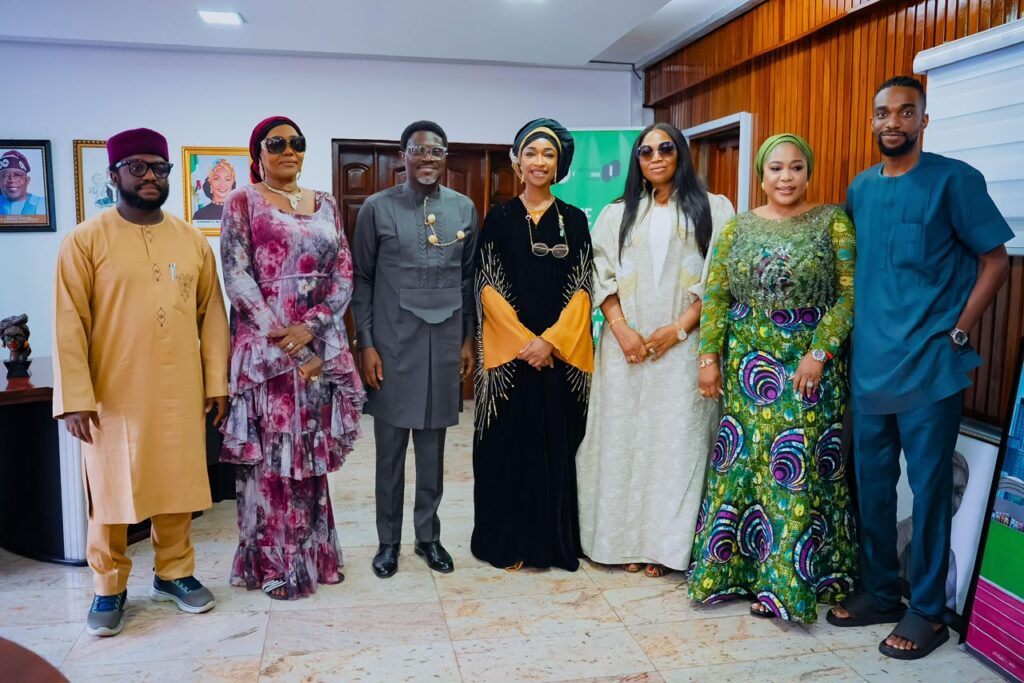
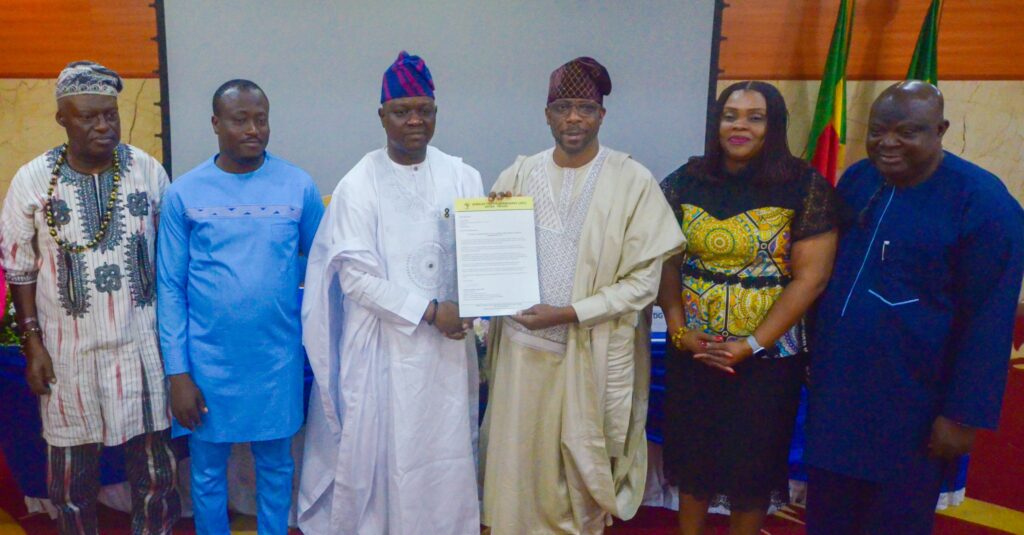
The Chairman Board of Trustees of the National Hospitality and Tourism Sector Skills Council (HTSSCN) and Chief Executive of Remlords Group, Mr. Nkereuwem Onung has urged Nigeria to close the skills gap in the tourism and hospitality sector to compete globally. He made the call while delivering his acceptance speech after the swearing in of executives of the Council, headed by him. It was part of the activities for the inaugural NIHOTOUR fellowship induction ceremony held on May 14, in Abuja.

Onung said hospitality and tourism are vital to Nigeria’s jobs, culture, and growth and that to compete globally, the industry must close the skills gap and raise its standards.

His words: “Hospitality and tourism are vital to Nigeria’s jobs, culture, and growth. But to compete globally, we must close the skills gap and raise our standards.

“A key part of that is delivering the ‘National Vocational Qualification and National Skills Qualification framework’ for our sector. These frameworks set the national standard for what a competent hospitality and tourism professional looks like at every level. Our job is to make sure the qualifications are relevant to industry, assessed rigorously, and recognized nationally and regionally.

“As a private sector-led body, we will work with employers, trade unions, professional bodies, and training institutions to ensure NVQ/NSQ programs are practical, current, and employer-validated. Our focus will be on aligning training with real industry needs, standardizing quality, and creating clear career pathways for youth, women, and informal operators.”

He thanked the Nigerian tourism minister Hannatu Musa Musawa  and the Director General of the National Institute for Hospitality and Tourism (NIHOTOUR) for the opportunity to serve the country and called on every stakeholder to partner with the council in the efforts to build  qualification system that employers trust.

The Governing Board of the HTSSCN Board of Trustees was recently reconstituted by the Director General of National Institute for Hospitality and Tourism (NIHOTOUR) Aare Abisoye Fagade with Mr. Nkereuwem Onung, the immediate past President of the Federation of Tourism Associations of Nigeria (FTAN) as chairman.

Nigeria tourism professionals identify poverty, envy at root of South Africa’s Afrophobia attacks

0

Following the increasing attacks on African migrants, particularly Nigerians, Industry Professionals have attributed these incidents to poverty and a lack of education among some South African citizens. In recent times, the crime rate in South Africa has risen, with some citizens accusing migrants of being responsible for criminal activities in the country. This perception has contributed to the growing wave of xenophobic attacks, which have increasingly evolved into acts of Afrophobia.

The issue was extensively discussed at Villa Square, a special segment of Cr8tive 9ja, a weekly tourism and cultural magazine programme aired every Thursday on Mainland 98.3 FM, Lagos. The programme, anchored by renowned tourism journalist Frank Meke alongside Bunmi Bade Adeniji, focused on the topic: “Afrophobia: A Threat to Africa’s Unity, Trade, and Tourism.”

Speaking through a telephone interview from Abuja, Susan Akporiaye, National Deputy President of the Federation of Tourism Associations of Nigeria (FTAN), emphasized the need for Africans to promote unity and mutual respect. She noted that both Nigerians and South Africans share responsibility in addressing the issue.

 “We should not ignore our own faults,” she said. “From my findings and investigations through sources in South Africa, I was informed that some Nigerians from the Igbo community installed a king in Durban, known as the Eze Ndi Igbo Durban. South Africans highly respect their traditional Zulu King, and according to their customs, only one king is recognized. Many Zulu people perceived this as an attempt to interfere with their culture.”

Akporiaye stressed the importance of African countries working together toward shared goals. She also called on South African President Cyril Ramaphosa to openly condemn Afrophobia, as well as the destruction of property and killings of fellow African nationals in South Africa.

Also speaking, Okorie Uguru, President of the Association of Nigerian Journalists and Writers of Tourism, attributed the profiling of Africans in South Africa to ignorance and lack of education.

 “When people are judged based on tribe, nationality, or religion, it is wrong and unacceptable in any responsible society,” he said. “As travellers, we have discovered that it is unfair to stereotype an entire group of people because of the actions of a few individuals.”

One of the guests, Bolaji Seun, a Youth tourism enthusiast who has travelled around the African continent also highlighted the importance of African unity and regional integration. “I do not understand why Africans find it difficult to remain united,” he said. “For example, when travelling within countries under the Economic Community of West African States (ECOWAS), travellers still face unnecessary immigration bottlenecks and unofficial charges for passport stamping, which should not be the case.”

Seun further shared that a South African acquaintance once told him her negative perception of Nigerians stemmed from a personal emotional experience involving romance relationship gone sour with a Nigerian man. According to Bolaji Seun such experiences often contribute to generalized stereotypes against Nigerians in South Africa.

Dr. Wole Oyebade, a member of the Guardian Editorial board who spoke from South African, blamed the Political tension in South Africa, stating that the coming elections and political tension have contributed to the situation. He said that the oppositions are blaming the immigration policies of the current administration as a major contributor to the increasing crime rate in South African.

 “For the African continent, they are of the opinion that the, Xenophobia attacks have become a reoccurring situation in South Africa, we realize if the government can discourage this attack and insist things are done the normal way, things might change” Dr. Oyebade noted.

Nkereweum Onung, the Chairman,  Nigeria Hospitality and Tourism Sector Skills Council, blamed envy for the rising attacks on Africa immigrants in South-Africa. He stated that such situation is destroying the African Unity, and progress of the continent. He also attributed the issue to the increasing poverty in South-Africa stressing that the government should speak to the citizens and educate them. “The South-Africans might be on the losing side with over 25% of their investment in foreign countries like the MTN, DSTV, Shoprite and others, this continuous attack will affect them on a long run” he said.

The President of the Nigeria Association of Tour Operators, Bolaji Mustapha, stated that the persistent attacks have negatively affected trade and tourism across Africa.

 “For tourism, many Africans are now more reluctant to visit fellow African countries and instead head to destinations in Europe or Asia because of developments in South Africa and visa restrictions across the continent,” she said. “As tour operators, we are working to promote intra-African tourism, but these incidents send the wrong message to potential travellers.”

Mustapha added that her association had advised tour operators to suspend the promotion of South African tour destinations until the safety of foreign nationals can be guaranteed.

 “We do not want to expose tourists to danger, despite South Africa’s efforts over the years to market its tourism sector,” she said, while urging the South African government to take decisive action to protect foreign nationals living in the country.

In his remarks, Frank Meke, Chief Executive Officer of Cr8tive 9ja Media, said Africa is currently facing a critical moment, with the international community closely observing developments on the continent.

He called on African leaders to handle the issue with caution and urgency in order to preserve African unity, regional cooperation, and economic growth.

Over the years, Xenophobia attacks have been carried out on Nigerians in South Africa, but a recent trend has emerged with the Afrophobia attacks. The Afrophobia is a form of racism, prejudice, and discrimination specifically targeting Black people and people of African descent. It involves dehumanizing attitudes, systemic discrimination, and violence including hate speech and crimes rooted in stereotypes of “inferiority” or “incompatible difference.

The South African Economy in the last five years has witnessed a sluggish growth from (2021 – 2025). In 2023, the country suffered a 0.8% decline, and in 2025, a 1.1% decline in GDP. The country’s unemployment rate remained consistently high, with the official rate rising to 32.9% in Q1 2025. The Country has enjoyed good business relationship with Nigeria as key of her establishment are domiciled in Nigeria like MTN, DSTV, Standard Chacter Bank among other businesses.

Some Nigerians are of the option that if the South African government fails to handle the issue and strongly condemn the Afrophobia attacks, some countries might as well send their South African Nationals packing.

Ojo-Lanre urges IIJ new students to embrace developmental  Journalism

0

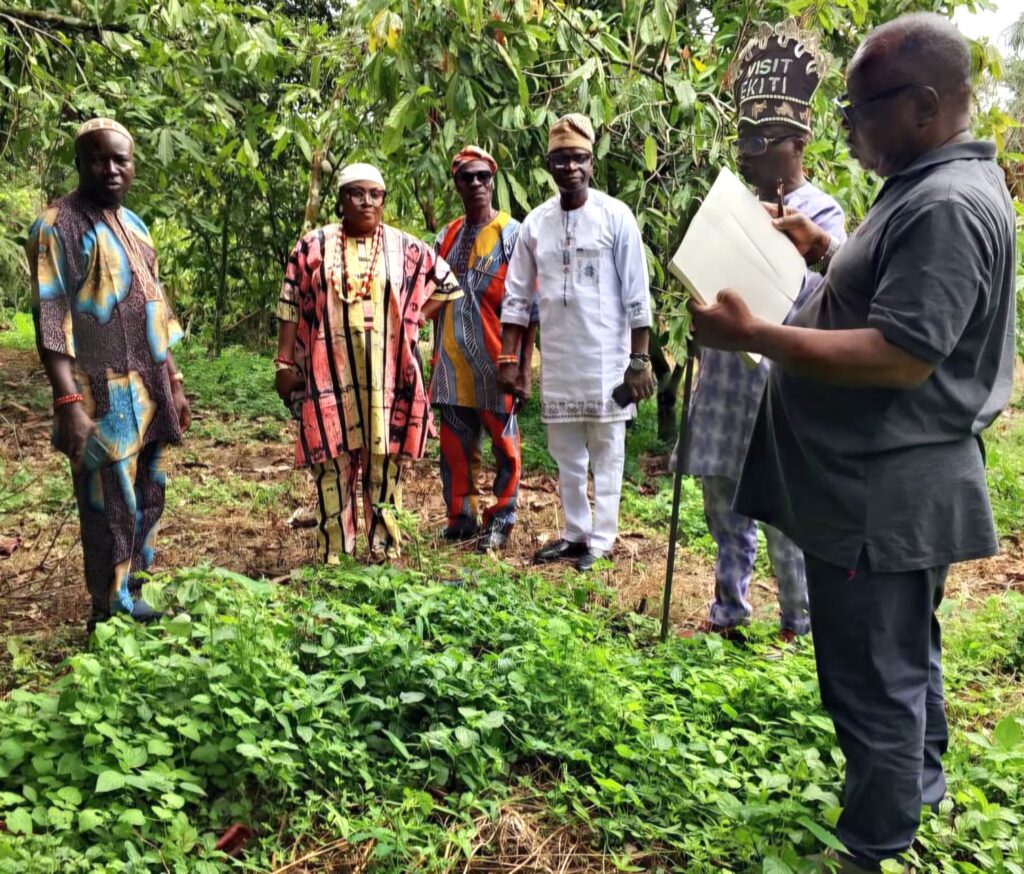
The Director-General of the Ekiti State Bureau of Tourism Development, Barrister Wale Ojo-Lanre, has charged newly admitted students of the International Institute of Journalism, IIJ, Ekiti State Campus, to distinguish themselves from the growing army of untrained citizen reporters by embracing development journalism as a responsible professional pathway.

Ojo-Lanre gave the charge while delivering the matriculation lecture titled “Development Journalism: The Responsible Pathway for Rookie Journalists in the Age of Phone Journalism” at the matriculation ceremony of the institute in Ado-Ekiti.

He said journalism was passing through one of the most dramatic revolutions in human history, noting that the mobile phone had become both a blessing and a danger to truth.

According to him, the rise of citizen journalism has created a situation where anybody with a phone, data bundle and a smattering of English can post, report, accuse, mislead, praise, condemn or destroy reputations in the name of journalism.

He warned that while technology has democratised access to publication, it has also opened the public space to reckless posting, fake news, blackmail, propaganda, rumour and unethical communication.

Ojo-Lanre said the challenge before rookie journalists was to prove that journalism is not noise, abuse, gossip, social media excitement or reckless publication, but a disciplined public service built on ethics, verification, fairness, balance and public interest.

He told the students that one of the most reliable ways to stand apart in the crowded media space was to embrace development journalism, which he described as journalism with depth, context, conscience and public purpose.

 “Development journalism is the journalism of social progress. It focuses on the welfare of the people, the growth of communities, the performance of institutions and the transformation of society. It does not merely report events; it interrogates their meaning and impact on the people,” he said.

Ojo-Lanre explained that development journalism compels journalists to go beyond surface reporting by asking deeper questions about policies, projects and public programmes.

He said a development journalist must not merely report that a road has been built, but must ask who will use the road, how it will affect farmers, traders, students and patients, whether it will reduce transport costs, whether the community was involved and whether there is a maintenance plan.

Similarly, he said a development journalist must not only report the commissioning of a hospital, but must investigate whether there are doctors, nurses, drugs, electricity, affordability and real benefits to the people.

The former Nigerian Tribune journalist and one of the pioneer students of IIJ, Ibadan Campus, recalled his own professional journey, saying he enrolled at the institute in 1997 despite already holding a degree in History and pursuing a Master’s degree.

He said the experience taught him that writing and journalism are related but not the same, stressing that professional training remains the dividing line between ordinary writing and responsible journalism.

Ojo-Lanre narrated how, during a professional registration exercise by the Nigerian Union of Journalists in Oyo State, he was told that despite being a fine writer and media practitioner, he was not qualified to be registered as a professional journalist because he had not received formal journalism training.

He said the humbling encounter pushed him to seek admission into IIJ, where he submitted himself to professional training and discipline.

 “That experience taught me a lesson I will never forget. A writer may impress, but a journalist must verify. A writer may entertain, but a journalist must inform. A writer may provoke, but a journalist must be responsible. A writer may depend on flair, but a journalist must depend on facts, fairness, ethics, balance and public interest,” he said.

He congratulated the matriculating students for choosing to pass through the furnace and rigour of professional journalism training, noting that their admission into IIJ marked the beginning of their transformation from ordinary writers, commentators, social media enthusiasts and public analysts into trained and certificated journalists.

Ojo-Lanre said the ability to speak good English or write beautifully does not automatically make anyone a journalist, just as fluency in legal language does not make anyone a lawyer without passing through the discipline of legal training and Law School.

He noted that influence, social media followership and visibility should never be mistaken for professional competence.

He said, “A phone is not a newsroom. A phone is only a tool. A phone does not teach ethics. It does not teach balance. It does not teach verification. It does not teach media law. It does not teach fairness. It does not teach public interest. That is why professional training is important.”

Ota welcomes 40-bed  Oba Timothy Oloyede Fadina primary health care centre

0

Ota Kingdom witnessed a historic moment of legacy, leadership, and community development with the official presentation of the 40-Bed Oba Timothy Oloyede Fadina Primary Health Care Center, a major healthcare intervention facilitated by the Olota of Ota, His Majesty Professor Adeyemi AbdulKabir Obalanlege, PhD.

The state-of-the-art Primary Health Care Center, named in honor of the late Oba Timothy Oloyede Fadina, Olagoroye II, reflects a powerful convergence of heritage, healthcare, and sustainable development. The project was financed and executed by the Presidency through the Office of the Senior Special Assistant to the President on Sustainable Development Goals (SSAP-SDGs), under the distinguished leadership of Her Excellency, Princess Adejoke Orelope-Adefulire.

Speaking at the occasion, the President of the Association of Tourism Practitioners of Nigeria (ATPN) and Chairman of the Oba Timothy Fadina Foundation, Prince Adetunji Fadina, described the project as “a living legacy that connects history with humanity.”

According to Prince Fadina, the facility represents more than healthcare infrastructure:

 “This is a symbol of continuity, dignity, and purposeful leadership. Naming this medical facility after our late father, Oba Timothy Oloyede Fadina, reminds us that true leadership is measured not only by titles held, but by lives remembered through service and impact.”

The event attracted an impressive gathering of distinguished personalities, including Awori royal fathers from across Aworiland, representatives of the Presidency’s Sustainable Development Goals Office, respected political leaders, business stakeholders, and women leaders.

Runsewe commends NANTA over ANJET’s, Frank Meke’s awards

0

The former Director General of the National Council for Arts and Culture (NCAC ) and the Nigerian Tourism Development Authority (NTDA) Otunba Runsewe has commended the National Association of Nigerian Travel Agencies (NANTA) for recognizing the contributions of the Association of Nigerian Journalists and Writers of Tourism (ANJET), and veteran travel writer and Managing Director of Cre8tive Naija Media Group, Mr. Frank Meke to the growth and development of tourism in Nigeria. He also congratulated NANTA on its 50th anniversary acknowledging the association’s contribution to the growth on tourism in Nigeria. 

Runsewe, in a press release, praised NANTA for understanding the role of journalism and travel journalists in the development of tourism in any country. He said: “I am very happy that a body like NANTA understands the role the travel journalists play in developing and marketing of a country as a destination. Specifically in Nigeria, I have been part of the industry for many years, and I understand the key role journalism and the travel journalists play in shaping perception and helping to create necessary awareness for the growth of the sector. Generally, the travel journalists craft narratives that inspire interest in a destination.  

Their contributions help to grow local economy and boost businesses.  

“ANJET, for many years, has been dogged and resolute in the pursuit of growth and development of Nigerian tourism. It was this understanding that helped shaped my positive partnership and interaction with them while in office, and Nigeria was better for it. Together we positively put the country in the world tourism map. I am happy NANTA understands this and has honoured them with the award.

“I am especially happy also with the award to Frank Meke. For more than three decades Meke has been at the forefront of tourism reporting in Nigeria. His reports and informed commentaries on tourism have led to better understanding of tourism in the country, and have helped shape policies and positions on key government positions in the industry.

“Meke, guided by knowledge and experience, has been consistent in his tourism writing and advocacy. I congratulate him for this recognition and urge him to keep up the good work.”

ANJET and Frank Meke were among the groups and personalities honoured during the 50th anniversary Annual General meeting of NANTA held recently in Ibadan, Oyo State.

“Jesus is Lord and Truth Is Constant! Well Said!”  

0

A Tribute to Victor Olanrewaju Kayode 

By Frank Meke  

Like all men, I am not perfect. No man is, and there is no prevaricating about it.

However, I won’t trade truth for butter and won’t look away from oppression and injustice. I can eat with the devil with a long spoon, but I won’t buy any of his wares: malice, bitterness, divisiveness, unforgiveness, lies, destructive tendencies, and mongering.

All my life as a journalist, I have devoted myself to helping people and our country. I have made friends, some genuine and sincere, others who walk on their heads and turncoats, betrayers of truth who, in due course, revealed the rot inside them.

Victor Olanrewaju Kayode was a good friend, consistent, yet not perfect. Truth connected us, and we fought many battles against industry oppressors.

His weapon was knowledge and patriotism. My not-too-often visits to the Nigerian Hotel and Catering Institute secretariat office in Oregun, Lagos, to see him were usually to marshal plans to help interrogate government policies on the tourism and hospitality sector.

We usually spent hours foraging through various documentaries and regulatory ecosystems. He was detailed like a legal mind and a general to go to war with.

“He saw tomorrow in our relationship and called a truce. I fell in line but didn’t know he would leave us so soon.”_

Our friendship was tested during the Federation of Tourism Associations of Nigeria elections last year. We held different views and positions, exposing our imperfections. While the war raged, we didn’t lose our humanity and friendship.

We didn’t underestimate our capacity to hold tenaciously to our different positions, but kept our friendship and respect for each other in view. Differently and deeply hurt, we engaged in conversations behind those who wanted to see us divided and torn apart. We gave them different faces but remained loyal to ourselves and to what had kept us away from charlatans for long.

His WhatsApp message, which formed part of the headline to this piece, truly revealed Victor’s love and personality. He saw tomorrow in our relationship and called a truce. I didn’t hesitate to respond to his love and respect. I fell in line but didn’t know he would leave us so soon.

At the service of songs, I saw many people who were still pretending they can define tomorrow, truce breakers and backstabbers. I cringed, not knowing why, but Victor Olanrewaju Kayode’s death mobilised men, once friends but torn apart by ego and vindictiveness.

Good night, dear brother and friend. I speak and write that I will miss your candour, commitment, and dedication to our industry.

On February 6th, Victor had written, “Franko, let us stop the fights, it’s early in the year. We are aging and should take things easy. We shall talk.” And I had replied, “Jesus is Lord and Truth Is Constant.” He replied again, “Well said.”

May God rest your soul in Jesus’ name.

NHCI loses President Victor Kayode

0

The Nigerian tourism industry has lost one of the leading industry voices, Mr. Victor Olarenwaju Kolade. He was the President of the Nigerian Hotel and Catering Institute (NHCI) and a council member of the Federation of Tourism Associations of Nigeria (FTAN). The late Kayode was, until his death, also the Group General Manager of   Etal Concepts Limited, owners of Etal Hotel Group. He died on April 7, 2026.

The late Kayode  was a thoroughbred professional in the hospitality industry, with over 40 years both in multinationals and Nigeria brand hotel organizations.

A native of Ondo State, Kayode was among the Nigerians that started their professional journey with Sheraton Lagos Hotel and Towers, as one of pioneering staff. Having cut his teeth the international ho-tel brand and rose through the ranks, he moved on to have a stint with other hotel groups, managing hotels such as the indigenous Nigerian Hotels Limited (Owners of former Ikoyi Hotel, Kano Central Hotel, Jos Hill Station Hotel Jos, Bristol Hotel, Lagos, and Managers of many state owned Hotels) before it was privatized.

He was at a time the Head, Human Re-sources at the Novotel FESTAC (Now Gold-en Tulip), and later joined the Pearl Court and Apartments, Ikoyi, Lagos.

I will fight quackery, improve NANTA membership, says Mustapha Mohammed

0

The National Association of Nigerian Travel Agencies’ (NANTA) Public Relations Officers (PRO) for Northern Zone and contestant for the post of the association’s First Deputy President in the forthcoming elective AGM in Ibadan, Alhaji Mustapha Mohammed, has promised, if elected, to double the membership of the association and also wage war against quack travel agents.

Mohammed made this vow while speaking with press men on the coming 50th anniversary AGM and on his ambition to be the First Deputy President of the body.

He commended the current NANTA leadership’s efforts to boost membership and promised to improve on it: “You will see that among NANTA members, the number is growing.

“I want make sure that by the next AGM, the number of recognized financial members, using the directory, not even asking for new members, is doubled, because I intend to take it door-to-door, region-to-region, to make sure that most of our members who are already feeling that NANTA is not doing much for them, we want to talk to them and bring them back to the fold. That way, we will create an identity which this administration has done a great job by launching the NANTA platform and making sure that you can now pay for your subscription and even request for your ID card and your staff ID card on the platform. It is giving NANTA the opportunity to vet, access and create a kind of identity that is not there before. But our journey has been magnificent; we have seen how these quacks have dealt a blow to our prestige and to our image. We are ready to fight them. They have nowhere to hide.”

On the issue of gender sensitivity and balance he said: “NANTA leadership has never been, and will never be by gender. We respect each other because before we become NANTA leaders, or even NANTA members, we are business people. And when we carry our business out, we don’t go there as male or female. We go as people that want to improve our business. We want to succeed. You will first of all improve your business before you will start saying whether you want to do this or that, to be a NANTA member or a leader. I believe NANTA has never been, and will never be gender bias. Two grown up adult are out to prove what they can do. The least thing they can do is to say what they can offer. But NANTA has never been and will never be about gender bias.”

Speaking on his professional background in the sector, Mohammed said: “I am the present Public Relations Officer (PRO) of NANTA Northern Zone. I have been in this industry for two decades. I started by attending the IATAA Foundation course, IATAA Management Course, and also I was privileged  to attend the IATAA Course in London-Hammersmith for corporate programme, and another IATAA programme at Turkish Academy in Istanbul.

“I like that to say that I am well-grounded when it comes to the issue of travel agency both in management, ticketing and marketing. I am vying for the post of the First Deputy President to bring my wealth of experience and my networking into play, to move the association forward to align with the vision of the present administration.  

“I belong to the PRO group. Most of the communications are routed through us. I saw so many good things and I felt  I have the capacity to make my own mark. I saw different committees the president has established and I saw that they are not fully integrated, partially because the president is doing a hell of a job trying to do advocacy and project NANTA in good light. My own aim is to help my fellow travel agents in trying to maximize the business travel agency. You know travel agency business is predominantly like a family business which later evolves into big time business. It is my business, it is my life and I believe that with the kind of network I have built in government, airline, and administration, I can bring better days for my colleagues in the travel business. This is why I decided to contest, of course with the encouragement of my zone, having seen the kind of efforts I put in trying to project the Northern Zone. I believe I am equipped and capable to carry out this responsibility.”

The NANTA 50th anniversary elective annual general meeting is expected to hold in Ibadan, the Oyo State capital from Tuesday, April 14 to Saturday, April 18. 

Glocient Hospitality advocates strategic investment in tourism infrastructure

0

Glocient Hospitality has reinforced the urgent need for strengthened public and private sector collaboration to drive infrastructure development and sustainable growth in Nigeria’s tourism and hospitality industry.

Speaking at the National Hospitality and Tourism Stakeholders Forum, the General Manager of Glocient Hospitality, Mr. Lanre Sharafa Balogun, highlighted the critical role of strategic investment in unlocking the full potential of Nigeria’s tourism ecosystem. The session emphasized innovative financing models, infrastructure expansion, and cross-sector partnerships as key drivers of long-term industry growth.

As part of its commitment to advancing the sector, Glocient Hospitality spotlighted Ikogosi Warm Springs Resort as a leading destination for Meetings, Incentives, Conferences, and Exhibitions (MICE) in Nigeria.

Nestled in a serene natural environment and globally renowned for its unique warm and cold spring confluence, Ikogosi offers a distinctive blend of business and leisure. The resort provides modern conference facilities, executive accommodation, wellness experiences, and immersive nature-based activities—making it an ideal choice for corporate retreats, leadership off sites, and high-level strategy sessions.

“Beyond its natural appeal, Ikogosi represents the future of integrated hospitality—where infrastructure, sustainability, and experience design converge to support both business objectives and well-being,” the General Manager noted.

With increasing demand for destination-driven corporate experiences, Ikogosi Warm Springs Resort is strategically positioned to attract local and international organizations seeking a premium MICE location outside traditional urban centers. Its accessibility, secure environment, and curated guest experiences make it a compelling alternative for organizations looking to combine productivity with rejuvenation.

Glocient Hospitality continues to play a pivotal role in shaping Nigeria’s hospitality landscape by managing and developing high-value assets, driving operational excellence, and fostering partnerships that elevate the industry’s global competitiveness.

From Lagos to Rwanda: Why Radisson Blu Kigali is Favourite for Nigerian Travellers

0

For many Nigerian travellers, the definition of luxury travel is evolving. While global cities such as London and Dubai remain familiar destinations, a growing number of African high-net-worth travellers are increasingly looking closer to home for experiences that combine luxury, culture,and convenience.

One destination quickly rising on that list is Kigali, Rwanda a city often referred to as the “Singapore of Africa” for its cleanliness, safety, and rapid economic growth. At the centre of this shift stands the iconic Radisson Blu Hotel & Convention Centr, Kigali, a landmark property known for its striking architecture and illuminated dome that has become a defining feature of the city’s skyline.

For Nigerian travellers seeking a refined African getaway or business destination, the hotel has quietly become one of Kigali’s most sought-after addresses.

Space, Comfort and Elevated Hospitality Luxury for many travellers from Nigeria often means space, comfort and the ability to host. The Radisson Blu Kigali delivers this at scale.

With 291 rooms and suites, the hotel offers a range of accommodation designed for both leisure and business travellers. At the top end, the 699-square-metre Presidential Suite provides expansive living space, including a private kitchenette, dining area and office space ideal for travellers who arrive with family, business partners or a full entourage.

Each room features a private balcony overlooking Kigali’s famous rolling hills, offering panoramic views that have become a favourite backdrop for visitors capturing the beauty of Rwanda’s capital.

A Culinary Experience with Global Influence

Dining is another highlight of the Radisson Blu Kigali experience. At The Larder, guests can enjoy international cuisine alongside locally inspired flavours, including the hotel’s well-known “Super Breakfast,” which has become a signature offering for guests starting their day in the city.

For something different, Filini Restaurant & Bar, the hotel’s Italian dining concept, brings a contemporary European touch to Kigali’s dining scene, reflecting the city’s growing cosmopolitan character.

At the Centre of Kigali’s Cultural and Entertainment Scene

One of the hotel’s biggest advantages is its location next to BK Arena, one of Africa’s premier entertainment venues. The arena regularly hosts major international concerts, sporting events, and cultural gatherings.

Recent years have seen global stars and African icons perform in Kigali, attracting visitors from across the continent and positioning the city as an emerging hub for entertainment and events.

Guests staying at the Radisson Blu Kigali are perfectly placed to experience this vibrant scene, with the hotel often becoming a natural gathering point for visitors attending major events.

Kigali’s Growing Social and Nightlife Scene

Beyond the hotel, Kigali offers a vibrant yet refined nightlife. The nearby district of Kimihurura is home to some of the city’s most popular lounges and social venues, where Afrobeats and Amapiano regularly set the soundtrack for Kigali’s evenings.

For Nigerian travellers, the cultural connection between West and East Africa is increasingly visible, with music, fashion and business communities naturally intersecting in the city.

Wellness, Golf and Reset

For those looking to unwind, the hotel’s Izuba Wellness Spa offers a range of treatments designed for relaxation and recovery. Facilities include treatment rooms, a sauna and steam rooms, providing a calm retreat after a day of meetings, exploring the city or attending events.

Kigali is also becoming a growing destination for golf enthusiasts, with nearby courses offering scenic fairways set against the city’s rolling hills. For many travellers who enjoy combining business or leisure trips with a round of golf, this adds another layer to Kigali’s appeal as a premium African destination.

A New African Luxury Destination

As Kigali continues to grow as a centre for diplomacy, investment and tourism, the Radisson Blu Hotel & Convention Centre, Kigali remains one of the city’s defining hospitality destinations.

“Across Africa we are seeing a strong rise in intra-African travel, particularly from markets like Nigeria,” says Rob Kucera, General Manager and District Director East Africa, “Our goal is to offer guests a world-class experience while celebrating the unique energy and culture that make Kigali such a remarkable destination.”

For Nigerian travellers seeking luxury, culture and connectivity within Africa, Kigali is quickly emerging as an unexpected yet compelling choice and Radisson Blu Kigali is often where that journey begins.

Enhanced connectivity (RwandAir Lagos–Kigali)  

The enhanced flight connectivity between Lagos and Kigali, (moving to daily flights) by RwandAir, significantly strengthens economic ties between Nigeria and Rwanda. This development fosters greater collaboration in trade, tourism, and investment opportunities, while delivering reliable and convenient travel options for passengers.

As Rwanda’s leading 5-star conference hotel, the Radisson Blu Hotel & Convention Centre, Kigali is ideally positioned to welcome this influx of traffic. The hotel offers Nigerian business travelers, MICE (Meetings, Incentives, Conferences, and Exhibitions) participants, investors, and leisure visitors direct, hassle-free access to world-class lodging, state-of-the-art meeting facilities, and exceptional services.

This improved connectivity is expected to drive higher occupancy rates, attract more high-profile MICE events, and solidify the hotel as the preferred choice for discerning guests seeking convenience, luxury, and seamless integration into Rwanda's vibrant business and tourism landscape.