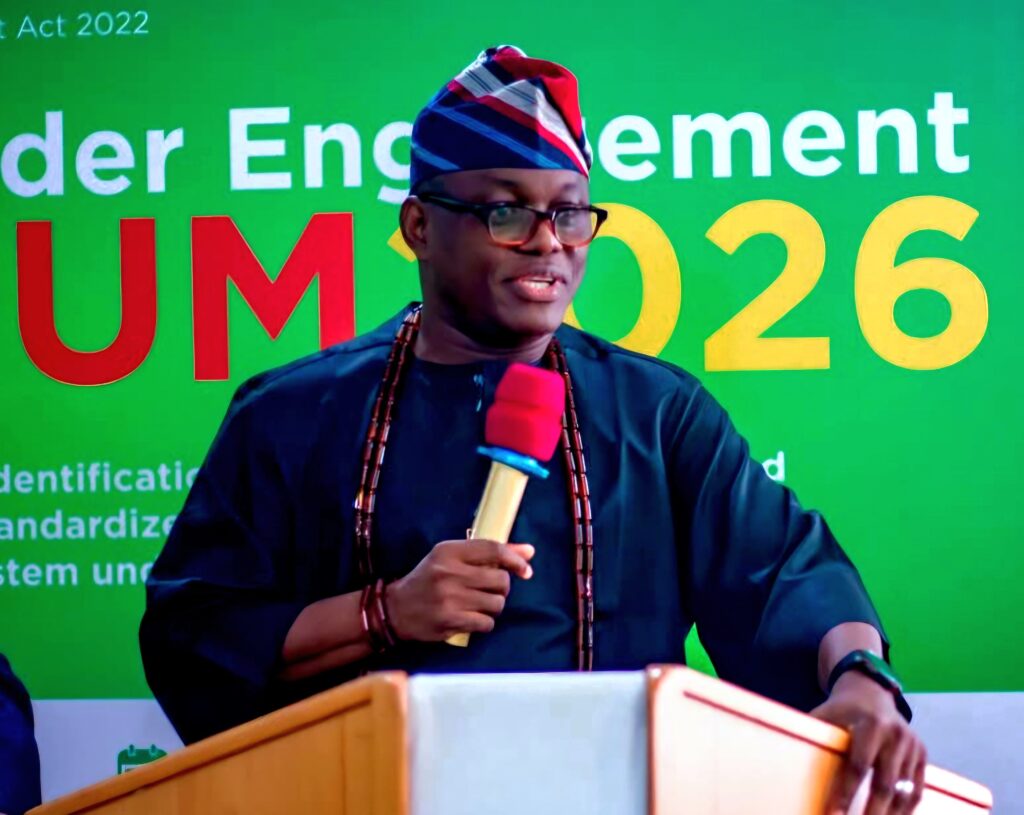
The Federal Ministry of Art, Culture, Tourism and Creative Economy has directed the immediate and full implementation of the NIHOTOUR Act 2022 and the NIHOTOUR Regulations 2025 by the National Institute for Hospitality and Tourism (NIHOTOUR).
The directive was conveyed in a letter dated February 26, 2026, signed by the Honourable Minister of Art, Culture, Tourism and Creative Economy, Hannatu Musa Musawa, mandating the Director-General of NIHOTOUR, Abisoye Fagade, to proceed with immediate implementation in accordance with the powers conferred on the Institute by its Establishment Act and subsidiary Regulations.
The Honourable Minister emphasized that effective regulation of personnel and operators within the hospitality, travel, and tourism sectors is critical to repositioning the industry as a structured, professional, and globally competitive contributor to Nigeria’s economy.
According to the Minister:
“The regulation of personnel and operators within the hospitality, travel and tourism sectors, as specified in the Act, is essential to enhancing professionalism, service quality, consumer protection, and sustainable industry growth. This regulatory framework establishes minimum standards for skills, ethics, safety, and operations. It will strengthen public confidence, improve competitiveness, and align the sector with national and international best practices.”
The Ministry further reaffirmed that implementation of the NIHOTOUR Act 2022 and Regulations 2025 represents a strategic milestone in strengthening institutional governance, standardizing training and certification, ensuring compliance with operational standards, and fostering investor confidence across the tourism value chain.
NIHOTOUR has been directed to formally communicate this mandate to all departments, stakeholders, operators, and practitioners under its regulatory purview to ensure full and immediate compliance.
The Federal Ministry remains committed to building a vibrant, well-regulated, and globally competitive hospitality and tourism industry that reflects Nigeria’s rich cultural heritage while driving sustainable economic growth.
Global Links and Services Ltd, a leading IATA-licensed travel agency with over 20 years of experience in creating seamless travel experiences across Nigeria and beyond, has announced its participation in the recent Namibia Tourism Board (NTB) and South African Airways (SAA) B2B stakeholders meeting in Windhoek.
As one of the 15 invited African agents, Global Links played a pivotal role in fostering partnerships to advance intra-Africa tourism, experiential travel, and investment opportunities in Namibia, aligning with its mission to transform travel dreams into reality through expertly curated itineraries, flights, tours, hotels, transfers, study abroad services, and faith-based pilgrimages.
Drawing on the success of a webinar and a familiarisation (FAM) trip, the event united African tour operators, hoteliers, and agents to make Namibia more accessible to intra-African travellers. Global Links’ Group Director of Communications, Tony Onwuchekwa, represented the company, gained firsthand insights on developing authentic, budget-friendly packages that highlight Namibia’s cultural heritage, wildlife, and MICE.
“Global Links is committed to bridging Africa’s tourism gaps through strategic collaborations and immersive experiences,” said Tony Onwuchekwa. “This event aligns perfectly with our vision of linking clients to the world’s wonders, and going forward, we’ll leverage our expertise in promoting African destinations to position Namibia as a must-visit hub for bleisure and adventure travellers.”
Key highlights from the event, which reinforce Global Links’ forward-looking role in intra-African tourism, include building partnerships. SAA’s Wilhelmine Veripi Kandjou, while speaking, emphasized collaboration. She promised SAA’s support to build reliable connectivity and support supports Global Links in its efforts to grow tourist arrivals from markets like South Africa and Germany, also integrate Namibia into our themed tours and pilgrimage offerings.
NTB’s Charmaine Matheus, highlighted the shift toward cultural and heritage tourism, backed by airport surveys. For Global Links’ clients in MICE and bleisure travel, according to Onwuchekwa, this opens doors to tailored packages blending gastronomy, community engagement, and personal storytelling.
While addressing the challenges on the issues of visa and connectivity hurdles, NTB’s Ndapewa Hangula detailed MICE visa processes via the Namibia Convention Bureau (NCB), while SAA outlined its Johannesburg hub linking 17 destinations.
Global Links advocated for policy changes to ease intra-African travel, as voiced by Hospitality Association CEO Gita Paitolda, and will actively promote streamlined solutions through our 24/7 client support and media strategies.
– Investment Opportunities: NIPDB’s Ndapewa Hangula positioned Namibia as a safe, investor-friendly gateway to Southern Africa, with features like the Digital Nomad Visa. Global Links sees immense potential for its network in hospitality, film production, and sports tourism (e.g., Desert Dash), committing to facilitating investments and cross-border packages that drive job creation and economic growth.
Under the leadership of its CEO Rev. Mrs Chinyere Umeasiegbu, honoured among Africa Travel 100 Women 2025, Global Links is poised to expand its role in promoting Africa-to-Africa tourism. By addressing connectivity gaps, fostering partnerships, and sharing Namibia’s stories via our blog and social channels, the company aims to unlock immersive, story-driven travel for thousands more clients.
The Director General of the Nigerian Tourism Development Authority (NTDA) Mr. Olayiwola Awakan has called for fresh perspective and newness of ideas in the development and marketing of Nigeria as a tourist destination, adding that the country’s tourism industry can only grow when both the private and public sector work together. He said this during his opening address at the African Tourism Commission (ATC) inaugural summit and exhibition held this week in Lagos.
The NTDA boss said the tourism sector could drive the Nigerian economy if managed properly. His words: “It’s (tourism) one sector that can drive Nigerian economy and get us to the Promised Land. And one way for us to do that is to work together and to synergize. It is my great pleasure on behalf of the Nigerian Tourism Development Authority and the government of the Federal Republic of Nigeria, to warmly welcome you all to this important gathering of Africa’s tourism leaders and stakeholders under the auspices of the African Travel Commission. We are truly honored to participate in this timely engagement which reflects our shared commitment to repositioning tourism as a strategic driver of economic growth, cultural diplomacy, job creation, and sustainable development across our great continent.”
Speaking on the ATC, Awakan said: “The African Travel Commission, ATC, was conceived from a shared continental aspiration to reposition tourism as a strategic instrument for Africa’s economic growth, cultural diplomacy, regional integration, and sustainable development. It serves as a unifying platform that brings together African government, tourism authorities, private sector operators, development partners, and the creatives to collectively advance Africa’s tourism interests. At its core, ATC champions collaboration, advocacy, policy alignment, and strategic promotion with the objective of presenting Africa as a single, compelling, and competitive tourism destination.”
The NTDA boss also praised the Executive Director of ATC, Dr. Lucky George and his team, for reviving the ATC initiative. He said Africa stands at a defining moment in its tourism evolution, that the continent is blessed with rich cultural heritage, diverse ecosystems, historic sites, vibrant creative industries, and resilient people. But that unlocking the full value of these assets requires collective action through harmonized policies, improved connectivity, shared marketing platforms, skill development, and strong public private partnerships. He spoke further: “The African Travel Commission provides a credible and structured framework for driving this collective action across borders. By integrating exhibitions, business-to-business meetings, high-profile engagements, and cultural showcases, the summit reinforces tourism’s role as a catalyst for economic diversification, job creation, and inclusive growth.”
Delivering a good message, the Chief Executive Officer of World Travel and Tourism Council (WTTC), Gloria Guevara promised her organization’s support for the sector in Africa, saying, “WTTC is proud to join this journey and support the sector so that we can unlock the potential for travel and tourism. 2023 was a historical year for travel and tourism. We had 1.5 billion international arrivals, the highest number ever. Globally, we’re forecasting that travel and tourism could reach 11.7 trillion and 371 million jobs. We are a country who was the third largest country in the world. In Africa, the sector contributed 225 billion to GDP and supported almost 30 million jobs. That’s a clear signal of how tourism is growing and the importance of the role of our sector. International visitor spending also grew, reaching 77 billion dollars. And that is very important. Africa is uniquely positioned to capitalize on the growth for international travel. But we face also some real challenges, like improving transportation. Connectivity, for instance, needs to expand new routes intra Africa and to Africa.”
Speaking on behalf of the Director of the Private Sector and Industries Commissioner and the Commissioner for Agriculture of the Economics Community of West African States (ECOWAS), Dr. Olalekan Afolabi said the summit was aimed at transforming the tourism industry rather than just taking: “We are here at this event not just to talk, but to transform. The very conception of this event forged in partnership between the ECOWAS, AfDB, NTDA signals our collective determination to move beyond rhetoric. Our shared goal is to focus on practical, actionable strategies to unlock the full value chain of African tourism. On a sub-regional basis across Africa, tourism contributes less in West Africa than it has in East and Southern Africa. According to the World Bank data, tourism has historically contributed just about 2% of West African gross domestic product that is GDP, compared to approximately 5.5% in East Africa and 3.4% in Southern Africa. But within the region we have countries like The Gambia that has a higher share of tourism to their GDP, about 20%. Countries like Senegal have about 7%, and Nigeria has about 3.6% contribution to GDP. So, this initiative is a wake-up call and it is an initiative in the right direction to push the share of GDP, the contribution of tourism to GDP even higher.”
The Managing Director of Tarzan Jetties, Tarzan Marine Enterprises Limited and President of the Association of Tourist Boat Operators and Water Transporters of Nigeria (ATBOWATON) Engineer Ganiyu Shekoni Balogun (Tarzan) has called on commuters on the waterways to always adhere to the safety instructions of boat operators while in the boat, most especially on the issue of wearing life jackets. He said the safety protocols which the boat operators are warned to strictly adhere to are for the safety of commuters being transported on water from one jetty to the other.
Tarzan, who is also a Board of Trustee (BoT) member of the Association of Tourism Practitioners of Nigeria said one of the biggest dangers to passengers face daily while on the boats is the refusal of some passenger to wear life jacket: “We face this problem daily. Some passengers, despite the appeal by the boat driver, would simply refuse to wear life jacket.
It is important of them to know that accidents can happen in water transportation, just like any other means of transportation. The chances of survival on water are very high when the passenger is on life jacket than when he or she is not wearing life jacket.
“Most the fatal cases of accident on water that claimed so many lives have a lot to do with the passengers not wearing life jackets. We spend huge amount of money to buy these jackets for passengers’ safety. We are therefore appealing to them to always help us to improve safety on our waterways by always wearing them.”
Tarzan also encourages his members and other boat operators to always enforce the wearing of life jackets by passengers while they are on duty.”
The annual National Tourism and Transportation Summit and Expo (NTTS) 2025 has called for the resuscitation of local government tourism committees to ensure local stakeholders participate the development and management of tourist sites and activities within their councils. This, it says, would enhance solution pathways in addressing the myriads of challenges in the sector at the grassroots level.
This was one of the 10 recommendations of the communiqué issued at the end of the 2025 summit recently held in Abuja, the nation’s capital.
The summit also called for the development of curriculum content for entrepreneurship, skill acquisition and capacity building programs that will enable youth and women to have access to needed skills for tourism business operations and investment activities.
In the area of transportation, the summit called on the government to increase investment in transportation infrastructure supported by public-private partnerships through strong synergy among all stakeholders, and also greater collaboration of stakeholders to standardize and implement effective standards and guidelines to suit the national domestic tourism sector.
Among other recommendation, the NTTS called on the government to improve national policy framework for a pragmatic synergy in various skills and capacity building programs in the development of the travel-tourism, hospitality and transportation industry.
It noted that there are various investment opportunities in the transportation, travels and tourism sectors, but the challenges of limited skills and capacities in this area has hamper the progress in tourism development.
The summit called on the government also to increase investment on digital opportunities in travel ticketing, cashless mobility and visitor analytic and digital cultural platforms as a way to grow the tourism transportation sector.
It noted that there is limited awareness and appreciation of the benefits of Technical and Vocational Education and Training (TVET) among the Nigerian populace, saying individuals prioritize traditional degrees over vocational training, leading to a mismatch between available job opportunities in tourism and transportation and the skills possessed by job seekers.
Earlier in his welcome address, the chairman of the local organizing committee and President of the Institute for Tourism Professionals of Nigeria, Chief Abiodun Odusanwo, said the annual hosting of the NTTS aims to strengthen the synergy between tourism and transportation as well as explore the interdependency among ministries, departments MDAs and private sector organization to drive inclusive growth and sustainable development of the Nigerian economy.
Odusanwo further noted that the summit has come a long way, with its communiqués serving as guides and roadmap for national policies on tourism and transportation. He said organizers appreciate and honour private and public sector participants, exhibitors, guests, speakers and collaborators for their trust, confidence and continuous participation in the summit since inception in 2018, thereby encouraging the annual hosting of the event for the economic good of the country via inclusive cooperation, collaboration and partnerships.
In her speech to open the summit, the Minister of Arts, Culture, Tourism and Creative Economy, Mrs Hannatu Musa Musawa, represented by the Director Overseeing Office of the Department of Domestic Tourism Promotion, Mr. Sunday Bisong, commended organizers of the NTTS for providing the platform where the pivotal needs of the country’s public and private sectors needs would be discussed in collaboration, coordination and connectivity to unlock the full potentials in tourism, transportation and creative economy, and explored actionable propositions. The minister further stated the commitment of the President Bola Ahmed Tinubu’s administration in infrastructure development and intermodal transportation systems so as to enhance accessibility to the nation’s tourism potentials across all regions of the country; evolving policies that integrate all developmental parametres that guarantee intensive economic growth of the nation and help to strengthen the linkages amongst key sectors to facilitate tourism business operations at all levels.
The summit was attended by leaders, industry stakeholders and practitioners in tourism, transportation, culture and other allied services.
Member of the Lagos State House of Assembly and the House Committee Chairman on Tourism and Culture, Honourable Bonu Solomon Saanu, has called for the full implementation of the Lagos State Tourism Master-plan that was passed by the state house of assembly and signed into law. He made this call while speaking with the members of the Association of Nigerian Journalists and Writers of Tourism (ANJET) in his office.
Saanu, who represents Badagry 1 constituency in the state house of assembly, believes that for the state’s tourism industry to grow to the desired level there is a critical need for effective implementation of the Lagos State Tourism Master Plan. The master-plan which was unveiled to the public on July 21, 2021 by the state governor, after undergoing rigorous review by experts, has so far not been implemented. Speaking on it, the lawmaker said: “Currently, I initiated a plan. I had to call on all the state’s past permanent secretaries and directors in the state’s ministry of tourism. I asked them to come so that we could look into how to implement the master-plan. I was in the ministry then when we launched the master-plan. But we could see that it is not being implemented now. You cannot run tourism without master-plan, and I give credit to those who helped us to package the master-plan. I have a copy here.
“So, we now decided to come up with a programme, se t up a committee and start the implementation. Currently, I am in talk with the governor to give all the approval. Those who have knowledge about it should be brought on board.
“Tourism is all about transportation, is that being taken care of? We have agro-tourism, how is that being handled? …medical tourism and so on. Tourism goes beyond putting a musician on stage and all that. What is the return on investment? By weekend now, come to the park in front of the assembly complex, it is taken over by fun seekers. What are we deriving from that? All these is imbedded in the state’s tourism master-plan, the implementation must start now.”
To maximize the return on investment in tourism, Saanu recommends a strategic collaboration with the private sector. This partnership is essential to leverage private sector expertise and resources, ensuring that tourism initiatives are not only well-funded but also efficiently managed.
By fostering a condusive environment for private sector involvement, Lagos can enhance its tourism infrastructure, attract more visitors, and ultimately boost the state’s economy.
Bonu also highlights the importance of accountability and transparency in budget allocation and spending. He calls for increased budgetary support for tourism, stressing that a well-funded tourism sector can become a significant economic driver for Lagos State.
Also, regular audits and financial reporting are crucial to ensure that funds are utilized effectively, delivering tangible benefits to the state’s tourism landscape.
Many would-be participants already in Enugu have been left disappointed by the decision to postpone the 2025 National Festival of Arts and Culture (NAFEST). It was supposed to kick off today, November 22 in Enugu. They are now trying to figure out their next line of action. However, they are expected to be addressed by the state governor of Enugu State Peter Mbah later today.
As at last night when the festival’s cancellation was announced, more than 20 states have arrived. Notable among the early arrivals were the Katsina State contingents who came with more than 60 horses. Katsina had planned holding a mini-Durbar parade during the festival.
The contingents are angry that the decision to postpone the festival was taken so late, allowing them to risk their lives traveling to Enugu from their different states.
The Federal Ministry of Arts, Culture, Tourism and Creative Economy had sent out a press release on Friday, November 21, the eve to festival, announcing the postponement of the festival.
In the release signed by Nneka Ikem Anibeze, Special Assistant to the Minister of Arts, Culture, Tourism and Creative Economy, Barrister Hannatu Musawa, the festival was postponed due to ‘ the recent insecurity incidents that have caused pain and disruption across different parts of the country. In solidarity with the affected families and communities, and out of deep respect for the lives lost, the Honourable Minister, Hannatu Musa Musawa, Esq., in consultation with stakeholders, has approved the postponement of the festival to a later date.’
The postponement raised also other posers. Many are asking whether the postponement means the ministry would hold two festivals never year to cover for this edition. There is also fear that many states may be unwilling to honour participation in the festival to avoid future disappointment like what is currently happening.’
All is set for the 8th edition of the National Tourism Transportation Summit and Expo (NTTS) holding on 2nd and 3rd December, 2025 at the Palm D’or Event Centre, Garki, Abuja. The event will bring together key players, policymakers and stakeholders in the tourism and transportation sectors to engage on advancing Nigeria’s socio-economic development through integrated connectivity. Under the Theme: Tourism and Transportation Connectivity: Accelerating the Synergy for National Socio-Economic Growth and Development, the annual Summit has become institutionalized as a strategic industry convergence platform to explore the critical nexus between tourism and transportation, as spelt out in this year’s theme of the event.
In a chat with press men in Abuja, the Chairman of the Inter-Ministerial Organising Committee and also Institute for Tourism Professionals of Nigeria (ITPN) National President, Aare Abiodun Odusanwo said the 2025 edition is coming at a defining moment, aligning with the Presidential directives aimed at fostering greater synergy and collaboration between tourism and transportation sectors, as part of the national strategy for economic diversification, infrastructure integration and job creation which are the prominent features of the tourism and transportation industries.
Participants at the two-day event will be drawn from major key players and stakeholders in the transportation and tourism sectors such as the air transportation; i.e. airlines, tour and travel operators, administrators of the aviation industry; the maritime industry which includes sea transport, boats and sea cruising operators; Road Transportation including major transport owners, car hire services, Uber, road traffic and safety agencies including the FRSC, motor insurance companies; state transport ministries and agencies; rail transport services.
Others are operators of the tourism and hospitality industry including tourism resort operators, National Parks Services; museums and monuments, state tourism ministries and boards, festivals and tourism events managers; hoteliers, restaurants and fast food operators; conferences and events managers; as well as service providers in the banking, oil and gas industries. The NTTS programme will also feature host city walk, exhibition, B2B and G2B sessions, tourism transport membership and fellowship inductions, and the gala night which will also feature awards to deserving stakeholders in the industry.
Speaking ahead of the event, the Chairman of the Inter-Ministerial Organising Committee, and National President of the Institute for Tourism Professionals of Nigeria (ITPN), Aare Abiodun Odusanwo emphasized the summit’s role in driving policy alignment, unlocking investment, and promoting sustainable mobility and tourism development across Nigeria’s 36 states and the FCT.
Some highlights of the summit include; High-level panel sessions featuring Ministers, DGs, and CEOs of tourism and transport Agencies; Stakeholder dialogue on rail, road, aviation, and inland waterways connectivity; Investment and PPP opportunities in destination development and transport infrastructure; Technical exhibitions showcasing innovations, services, and tourism transport solutions; State showcases, youth enterprise pavilions, and networking sessions.
The 2025 NTT Summit is a must attend event for all stakeholders; state governments, MDAs, operators, investors, transport unions, travel companies, airlines, rail corporations, hospitality practitioners, ICT innovators, tourism professionals, academia, development partners and media in order to actively
participate in this crucial national event and unlock the economic potentials of Nigeria’s tourism transportation industries.
Aare Odusanwo expressed his optimism that the full participation by key stakeholders will contribute to shaping new frameworks for seamless mobility of people and services, safe, accessible, and sustainable tourism experiences. The Summit will further enhance private sector-driven innovation and infrastructure financing as well as alignment with global best practices in integrated tourism transportation.
A number of concerned stakeholders equally expressed confidence and support for the Summit saying it provides a strategic platform to action the Federal Government’s directive on institutional collaboration between Ministries of Tourism, Transportation and Aviation, as well as sub-national agencies in ensuring that tourism and transport planning are harmonised to drive inclusive economic growth. Odusanwo said the summit, in its usual tradition and characteristics, has provided suitable grounds for Nigeria’s destination marketing and domestic tourism promotion.
The President of the Association of Tourist Boat Operators of Nigeria (ATBOWATON) and Managing Director of Gani-Tarzan Marine Enterprises Limited, Engineer Ganiyu Shekoni Balogun (Tarzan) has described the recent conferment of the Seriki Adeen on him by by the Da’iratu Maga’mi Ibrahi’m Movement Dawah of Nigeria (DAHMOD) of Ilese-Awo, Abeokuta, Ogun as vehicle to help unite people from different faith, tribe or colour.
The honour was conferred on Tarzan at a colourful ceremony witnessed my Muslim religious leaders, family and well-wishers. The foremost water transportation personality was turbaned amidst prayers, Islamic songs and merry making.
Tarzan , speaking on the honour, said it was in recognition of his efforts to serve his God and serve humanity. “I feel great, I feel honoured, I feel that I am being recognized by my community in Abeokuta. My name is Abdulganiyu Shekoni Balogun. Abdulganiyu is a Muslim name. I am proud to be a member of that community, and I think my duty is to bring people together, Muslim, Christians or any other religion. Everybody should be united; we should be one, and should not be fighting ourselves. I am very happy to do that and I am ready to support them with whatever I have. You can only give what you have. You cannot give what you do not have.
”I try to support the community, you know I am also a Rotarian, so put water out my compound and help to solve the community’s water problem.
“I also worship in the community mosque whenever I am in my house in Abeokuta. So, I appreciate the recognition.”
Tarzan has been one of the most consistent tourism industry practitioners in Nigeria for more than three decades, and has been an advocate and enforcer of safety measures in water transportation for
Hospitality and Tourism Management Association of Nigeria (HATMAN) has concluded plans for the inauguration of the Executive of its South East zone, as it seeks to boost its activities and entrench its presence in the region.
A two-day activities have been unveiled to hold between November 13 and 14, 2025, with the general session of the Association, courtesy visit to the Imo State Ministry for Tourism, Hospitality and Culture and some of the stakeholders in the State, slated for November 13.
The inauguration of the Executive, which will attract members of the Association and other stakeholders, including operators in the government circle in the five South East states (Imo, Abia, Anambra, Enugu and Ebonyi), will hold on November 14 at the Muna Suites, Off Port Harcourt Road, New Owerri, Imo State.
Also expected in attendance is a Fellow and former Second Deputy President of HATMAN, Dr Rosemary Aji, who will be bringing her wealth of experiences towards increasing HATMAN’s presence in Abia State. The National officials of the Association, with its National President, Dr (Mrs) Lillian Managwu and Board Chairman, Dr Aliyu Badaki, who is also the National President of the Federation of Tourism Associations of Nigeria (FTAN), will be heading the team from the national level.
The new Executive to be inaugurated is headed by Dr Ndidi Ezeibe as Zonal Vice President and five State Coordinators: Dr Peace Uhuegbu-Imo State; Dr Callister Ogbu-agha-Ebonyi State; Prof. Elochukwu Nwankwo-Enugu State; and Grace Okeke-Anambra State.
As a professional body, HATMAN was established in 1996, with a spread across the 36 states of the federation and Abuja. It brings together professionals and operators, including academics, scholars and students from all sectors of the hospitality industry and its allied sectors.
HATMAN’s mission is to unite and empower professionals in the hospitality and tourism sector, foster knowledge sharing, promote industry standards, and advance career development.
While its vision is to be the leading professional body in Nigeria, significantly contributing to the growth and development of the nation’s hospitality and tourism industry by shaping its future through education, innovation, and opportunity.